
International Examination
Collaborative Online Learning Program
Joint Degree and Double Degree
Short Mobility Program
SDG Film Festival
Study Abroad
Unit B-23 Jalan K.H. Mas Mansyur Kav. 35, Jakarta Pusat 10220, Indonesia
T: (021) 5794 3751
F: (021) 5794 3752M: +62 815-1305-3559 / +62-815-1305-1344
E: [email protected]
IG:lspr.international
LSPR, UNFPA Indonesia, and the Philippine Embassy Advance ASEAN Dialogue on Safe Digital Spaces for Women and Girls

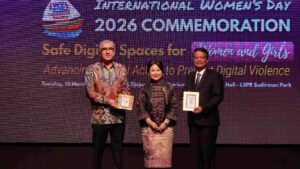
Jakarta, March 10th, 2026 – LSPR Institute of Communication & Business, in collaboration with the Embassy of the Republic of the Philippines and the United Nations Population Fund (UNFPA) Indonesia, hosted a high-level forum titled “Safe Digital Spaces for Women and Girls: Advancing ASEAN Action to Prevent Digital Violence.” The event brought together representatives from government, diplomatic missions, international organizations, academia, civil society, and students to address the growing challenge of technology-facilitated gender-based violence (TFGBV) and to strengthen regional collaboration in creating safer digital environments for women and girls.
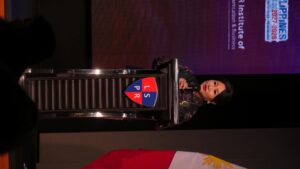
Dr. (H.C) Prita Kemal Gani, MBA, MCIPR, APR, FIPR
The forum responded to the findings of Indonesia’s 2024 National Survey on Women’s Life Experiences (SPHPN), which revealed that 7.5 percent of women in Indonesia have experienced digital violence perpetrated by non-partners. Through this initiative, LSPR and its partners reaffirmed their shared commitment to advancing gender equality, promoting digital safety, and encouraging coordinated action across ASEAN. Opening the forum, Dr. (H.C.) Prita Kemal Gani, MBA, MCIPR, APR, FIPR, Founder and CEO of LSPR Institute of Communication & Business, emphasized the urgent need to raise public awareness about digital violence, particularly among young women. She highlighted that online abuse is part of a broader continuum of gender-based violence and requires collective action from governments, educational institutions, civil society, and the private sector. Dr. Prita noted that by bringing together diverse stakeholders and screening the UNiTE 2025 short film “Fotome,” the forum encouraged greater understanding of the realities faced by survivors while promoting stronger prevention and response mechanisms.

Mr. Hassan Mohtashami
Representing UNFPA Indonesia, Mr. Hassan Mohtashami, UNFPA Representative in Indonesia, reaffirmed that every woman and girl has the fundamental right to live free from violence, both offline and online. He stressed that as digital technologies continue to evolve, technology-facilitated violence has become an increasingly urgent human rights issue that demands survivor-centered policies, stronger institutional responses, and greater public awareness to ensure that digital spaces remain safe and inclusive.

H.E. Christopher B. Montero
His Excellency Christopher B. Montero, Ambassador of the Republic of the Philippines to Indonesia, highlighted the importance of bilateral, regional, and multilateral cooperation in addressing technology-facilitated gender-based violence. As the Philippines assumes the ASEAN Chairmanship in 2026, he noted that the forum provided a timely opportunity to share experiences and best practices between the Philippines and Indonesia while further advancing the ASEAN Gender and Development (GAD) agenda. He acknowledged that although both countries have made significant progress in promoting gender equality, important implementation challenges remain, particularly at the community level.
Following the screening of the short film “Fotome,” participants joined an expert panel discussion moderated by Ms. Tata Yunita, Founder of Tenggara Youth and a member of the UNFPA Community of Practice. The discussion explored how digital platforms have created new forms of violence while also offering opportunities for advocacy, education, and survivor support.
The panel featured distinguished speakers from national and regional institutions. Ms. Sondang Frishka Simanjuntak, Commissioner of the National Commission on Violence against Women (Komnas Perempuan), shared that more than 374,000 cases of violence against women had been reported, while acknowledging that many incidents remain undocumented. She emphasized the need to harmonize legal frameworks, particularly between the Law on Sexual Violence Crimes (TPKS Law) and the Electronic Information and Transactions (ITE) Law, to ensure stronger protection for survivors.
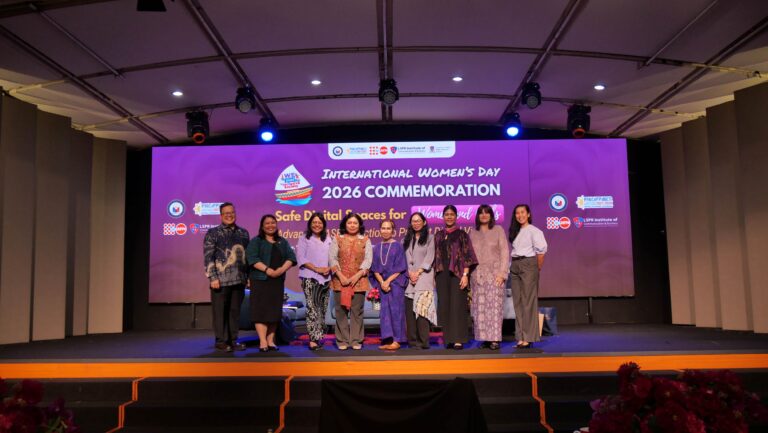
Representing the ASEAN Secretariat, Mr. Miguel Rafael V. Musngi, Assistant Director and Head of the Poverty Eradication and Gender Division, highlighted that one in ten women experience violence during their lifetime and stressed that harmful social norms are increasingly amplified through digital technologies. Ms. Rebecca Rafaela R. Baylosis, Senior Officer at the ASEAN Secretariat, emphasized that addressing digital violence requires cross-sectoral collaboration, integrating technology governance with women’s empowerment and gender equality initiatives throughout ASEAN.
From the academic perspective, Dr. Lestari Nurhajati, S.Sos., M.Si., Associate Professor at LSPR Institute of Communication & Business, observed that reported statistics represent only a fraction of actual cases, as many survivors choose not to report their experiences. She underscored the importance of developing digital literacy programmes that are trauma-informed and tailored to the needs of survivors rather than relying on generalized public awareness campaigns.
The forum concluded with a shared understanding that preventing technology-facilitated gender-based violence requires stronger policy coherence, survivor-centered legal frameworks, digital literacy, and sustained collaboration among governments, academia, civil society, and regional organizations. Through this initiative, LSPR Institute of Communication & Business, together with the Embassy of the Republic of the Philippines and UNFPA Indonesia, reaffirmed their commitment to fostering safer digital spaces where every woman and girl across ASEAN can participate, communicate, and thrive free from violence and discrimination.