
International Examination
Collaborative Online Learning Program
Joint Degree and Double Degree
Short Mobility Program
SDG Film Festival
Study Abroad
Unit B-23 Jalan K.H. Mas Mansyur Kav. 35, Jakarta Pusat 10220, Indonesia
T: (021) 5794 3751
F: (021) 5794 3752M: +62 815-1305-3559 / +62-815-1305-1344
E: [email protected]
IG:lspr.international
The 8th SDG Film Festival 2026: Conference, Film Screening, and Awards Ceremony
Jakarta – LSPR Institute of Communication & Business, in collaboration with the SDG Film Festival, successfully hosted The 8th SDG Film Festival 2026, a series of international events comprising a Conference (24 June 2026), Film Screening (30 June 2026), and Awards Ceremony (2 July 2026). Since its establishment in 2018, the SDG Film Festival has served as an international platform that utilizes film and visual storytelling to promote awareness and action toward the United Nations Sustainable Development Goals (SDGs), bringing together academics, filmmakers, industry professionals, and students from around the world.
Conference: Advancing Sustainability Through Communication and Research
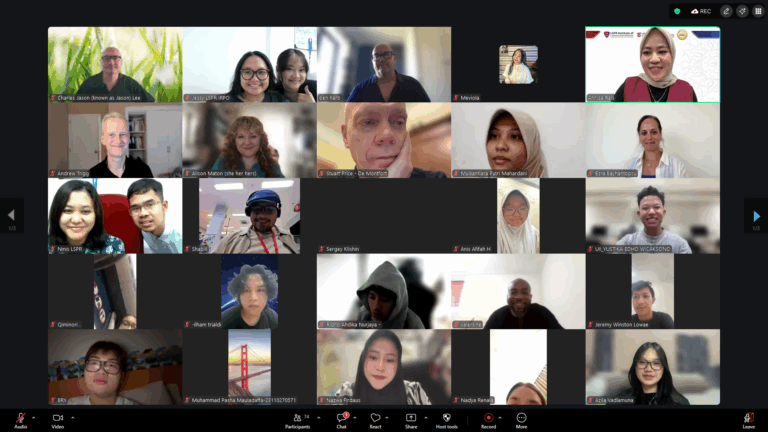
The 8th SDG Film Festival commenced with the 2026 Conference, an international academic forum that explored the intersection of communication, media, technology, public policy, and creative industries in advancing sustainable development. Organized in collaboration with international academic partners, the conference highlighted global perspectives on environmental sustainability, climate action, gender equality, human rights, quality education, health and well-being, reduced inequalities, and sustainable social development.
The conference featured distinguished international speakers representing leading universities and institutions. Professor Stuart Price from the Media Discourse Centre opened the conference with his presentation, The Myths of Sustainability: Technology, Power, Managerialism, Class, and Hierarchy. This was followed by Professor Jason Lee and Ms. Alison Maton from De Montfort University, who presented Comparative Smart Cities: Transport Systems, Cultural Identity, and Urban Strategies in Reykjavík and Santa Cruz, Tenerife (SDG 11).
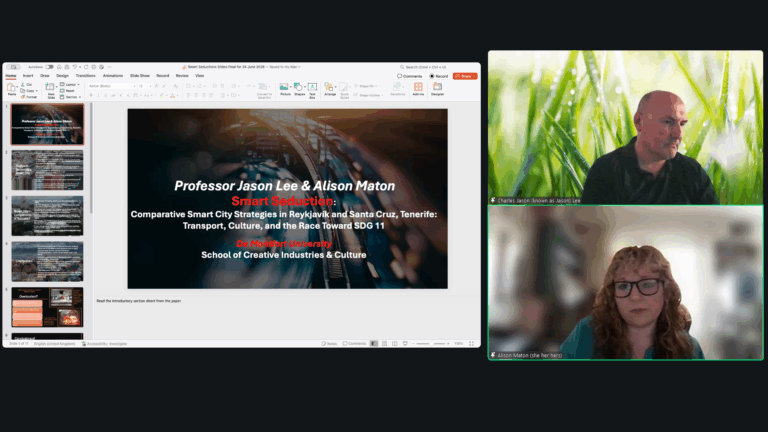
The academic discussions continued with Associate Professor Esra Bayhantopçu from Kadir Has University, who explored The Role of Communication in Sustainability Initiatives and Public Awareness. Representing LSPR Institute of Communication & Business, Mr. Andrew Trigg presented Public Service Announcements (PSAs) in Support of the SDGs, highlighting the power of creative communication in inspiring positive social change. The conference concluded with Associate Professor Ben Harbisher, Director of the SDG Film Festival, who delivered a talk on Small-Scale Sustainable Filmmaking and Sustainability in Action.
The conference demonstrated LSPR’s commitment to supporting the United Nations Sustainable Development Goals through education, research, and creative media. By bringing together international scholars, industry experts, and students, the event fostered meaningful dialogue, encouraged cross-cultural collaboration, and emphasized the vital role of communication and filmmaking in addressing global challenges.
Film Screening: Stories that Inspire Sustainable Action
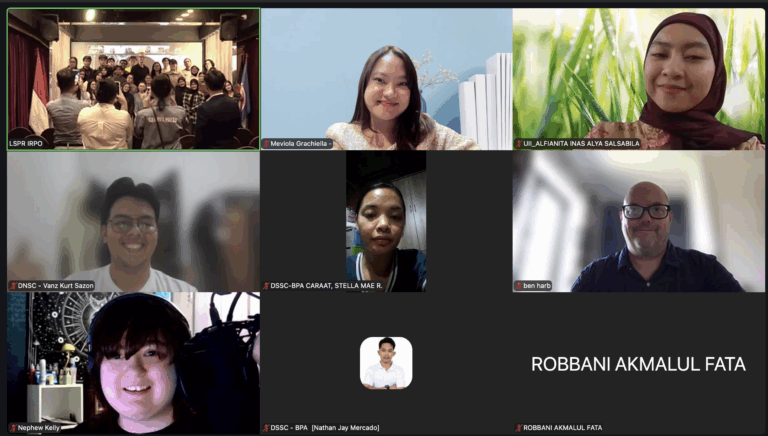
Continuing the festival, LSPR hosted the 8th SDG Film Festival 2026 Film Screening on 30 June 2026. This year’s SDG Film Festival welcomed a diverse collection of student films from around the world, including entries from the Philippines, Kyrgyzstan, the United Kingdom, Malaysia, the United States, India, Cambodia, the United Arab Emirates, Austria, and Indonesia.
The almost four-hour screening showcased a carefully curated selection of international student films addressing issues such as poverty reduction, environmental protection, equality, social justice, and sustainable urban development. Through a variety of storytelling formats—including drama, documentaries, public service announcements, animation, and experimental films—the filmmakers explored practical and innovative responses to today’s global challenges.
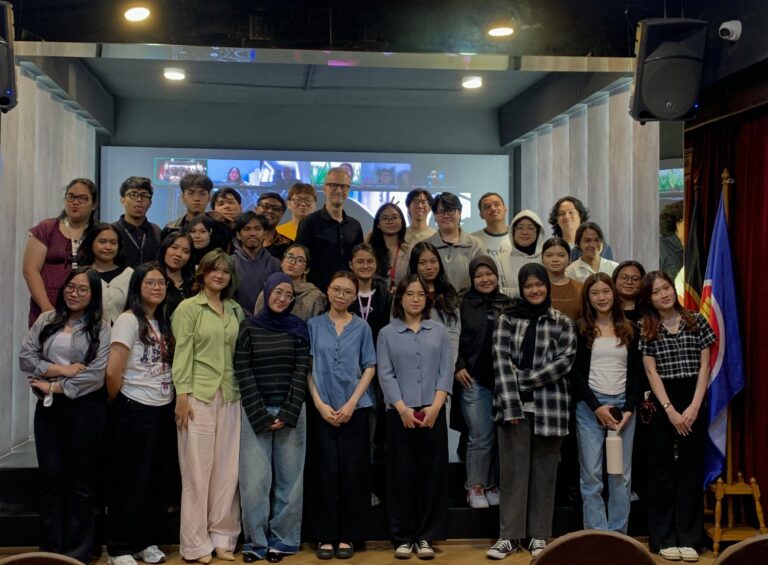
More than simply presenting films, the screening served as a platform for intercultural dialogue, demonstrating how visual storytelling can foster empathy, inspire discussion, and encourage collective action toward achieving the Sustainable Development Goals.
Awards Ceremony: Celebrating Creative Excellence for Sustainable Development
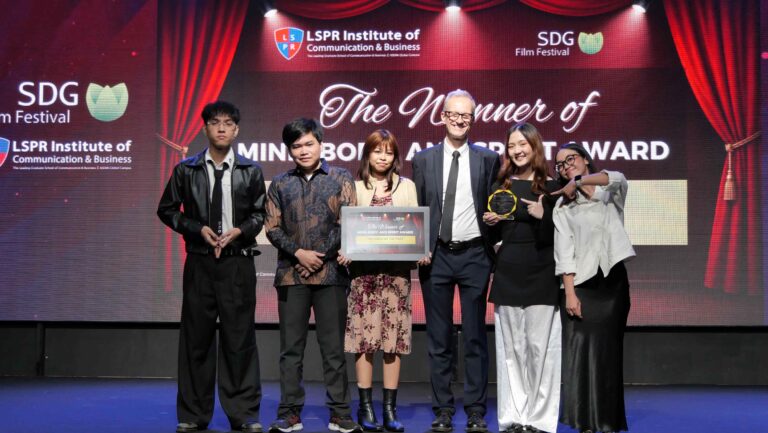
The festival concluded with the 8th SDG Film Festival 2026 Awards Ceremony, held in a hybrid format at the Prof. Dr. Djajusman Auditorium and Performance Hall, LSPR Sudirman Park Campus, while also connecting virtually with filmmakers and participants from around the world. The ceremony celebrated outstanding films that inspire action toward achieving the United Nations Sustainable Development Goals.
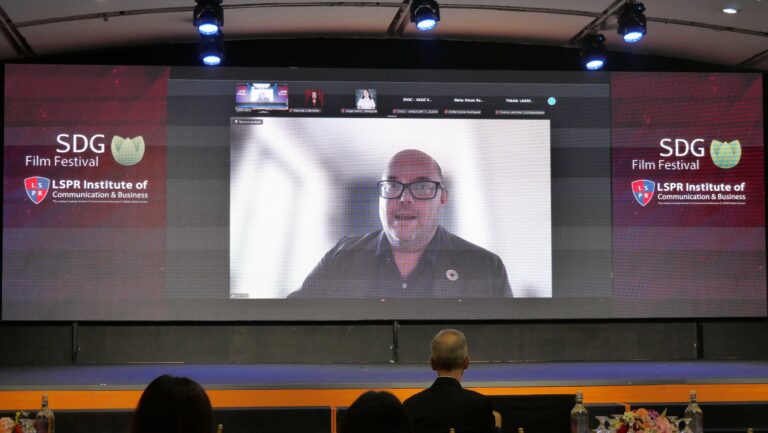
Opening the ceremony, Dr. Ben Harbisher, Director of the SDG Film Festival, congratulated all nominees and highlighted the remarkable quality and diversity of this year’s submissions:
“This year’s work truly represents the entire spectrum of creativity, from micro documentaries to fictional shorts, PSAs, commercials, animations, and interactive work. This year, the overall quality of entries has been extremely high, and our panel of judges had the challenging task of evaluating cinematography, narrative content, overall style, complexity, and creativity. Please give yourselves a round of applause for recognizing and articulating the issues that matter to you.”
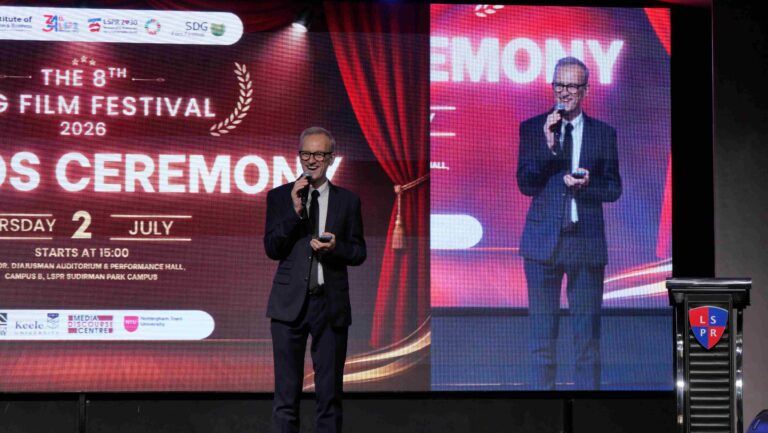
Representing LSPR Institute of Communication & Business, filmmaker and lecturer Mr. Andrew Trigg, B.Sc., M.A., reflected on the importance of meaningful storytelling in today’s digital era:
“We live in an age of distraction—constant notifications, infinite scrolling, YouTube Shorts, sensational headlines, and AI-generated content that continually competes for our attention. It is truly wonderful to be involved in a festival that brings people together to reflect on our planet, our communities, and the important challenges we all face. To all the filmmakers, nominees, and winners, I offer my sincere thanks and congratulations.”
The awards recognized excellence across eight categories. Alfianita Salsabila received the Storytelling Award for Cetana, while Vanz Kurt Sazon won the People, Planet, & Places Award for Bilin. Pelangi earned the Mind, Body, & Spirit Award for Melodies of the Past. Both Alfianita Salsabila and Vanz Kurt Sazon received two awards, with Cetana also winning the Sustainable Production Award and Bilin receiving the Film Craft Award.
Additional winners included Oliver Roland, who received the Critical Intervention Award for In Memory of Justice; Muhammad Pasha Mauladaffa, who won the Seeds of Hope Award for Dosis Penutup; and Lee Joshua Sardoma, whose film Pagbalik Sa Lawod: The Shore Awaits received the festival’s highest honor, the Best Film Award.
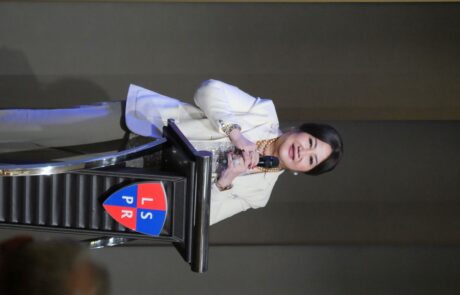
Following the presentation of the awards, distinguished institutional leaders reflected on the transformative role of storytelling and film in shaping society. Dr. (H.C.) Prita Kemal Gani, MBA, MCIPR, APR, FIPR, Founder and CEO of LSPR Institute of Communication & Business, emphasized:
“First of all, congratulations to all LSPR students and all the winners of the SDG Film Festival. Today, we celebrate outstanding filmmakers whose inspiring works promote the United Nations Sustainable Development Goals through the power of storytelling. To tell a story correctly, it must be grounded in facts and research. A meaningful story should also illustrate the process of finding solutions that inspire others. This is not an easy task, as it requires careful research and observation, but I truly believe that inspiring stories can create a lasting positive impact.”
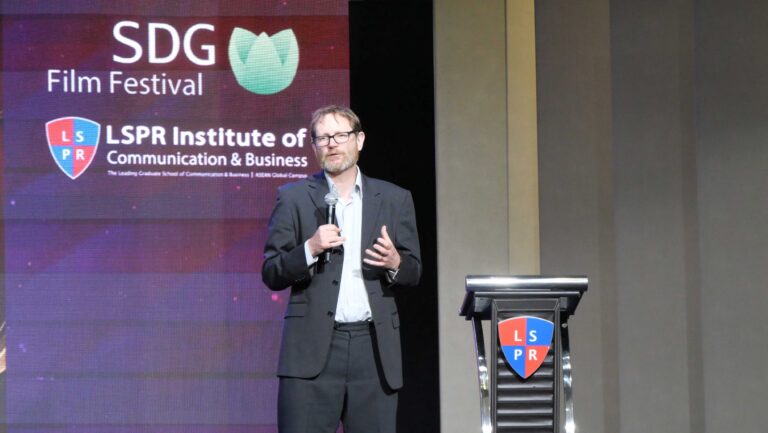
Professor Tristan McCowan, Professor of International Education at the UCL Institute of Education, highlighted the unique ability of film to inspire change through emotional connection, stating:
“Knowledge alone is not enough. While we can understand how the atmosphere works and the science behind climate change, we also need the arts—film, literature, music, and all forms of human creativity—to inspire change, build emotional connections, and help us understand one another. With only four years remaining until 2030, I invite everyone to be part of the dialogue in shaping the next generation of the Sustainable Development Goals.”
The successful conclusion of the 8th SDG Film Festival reaffirmed its growing international impact as a platform that empowers young filmmakers to use cinema as a catalyst for sustainable development. Through meaningful collaboration between universities, industry professionals, and emerging filmmakers, the festival continues to nurture creative talent while demonstrating the power of storytelling to inspire dialogue, strengthen global understanding, and contribute to achieving the United Nations Sustainable Development Goals.